My little app to keep up with the literature weekly, and now it's yours too!
Open EconRadar20,000+ papers · 20 journals and NBER · updated every week
Let’s be honest, keeping track of all that is coming out is not always easy (especially if, like me, you tend to shun Twitter…), let alone keeping a bird’s-eye view of how all those new papers might relate to (or differ from) one another. That’s exactly why this little app is here to help! Now, here are the three things the app does that could genuinely save you time or help you look differently at the current research landscape in your preferred field:
01
What’s out there?
The number one goal of the app is obviously to reference as many publications as possible, with new ones added every week, so you don’t miss your next life-changing paper that’s going to make you rethink your whole career. For now, I set up the app to scrape data from NBER as well as the top 20 econ journals, but I might expand the pool in the near future (especially when it comes to fields of economics that are a bit more niche, like econ history, where smaller journals definitely have interesting things to show).
02
How does it fit in the grand scheme of things?
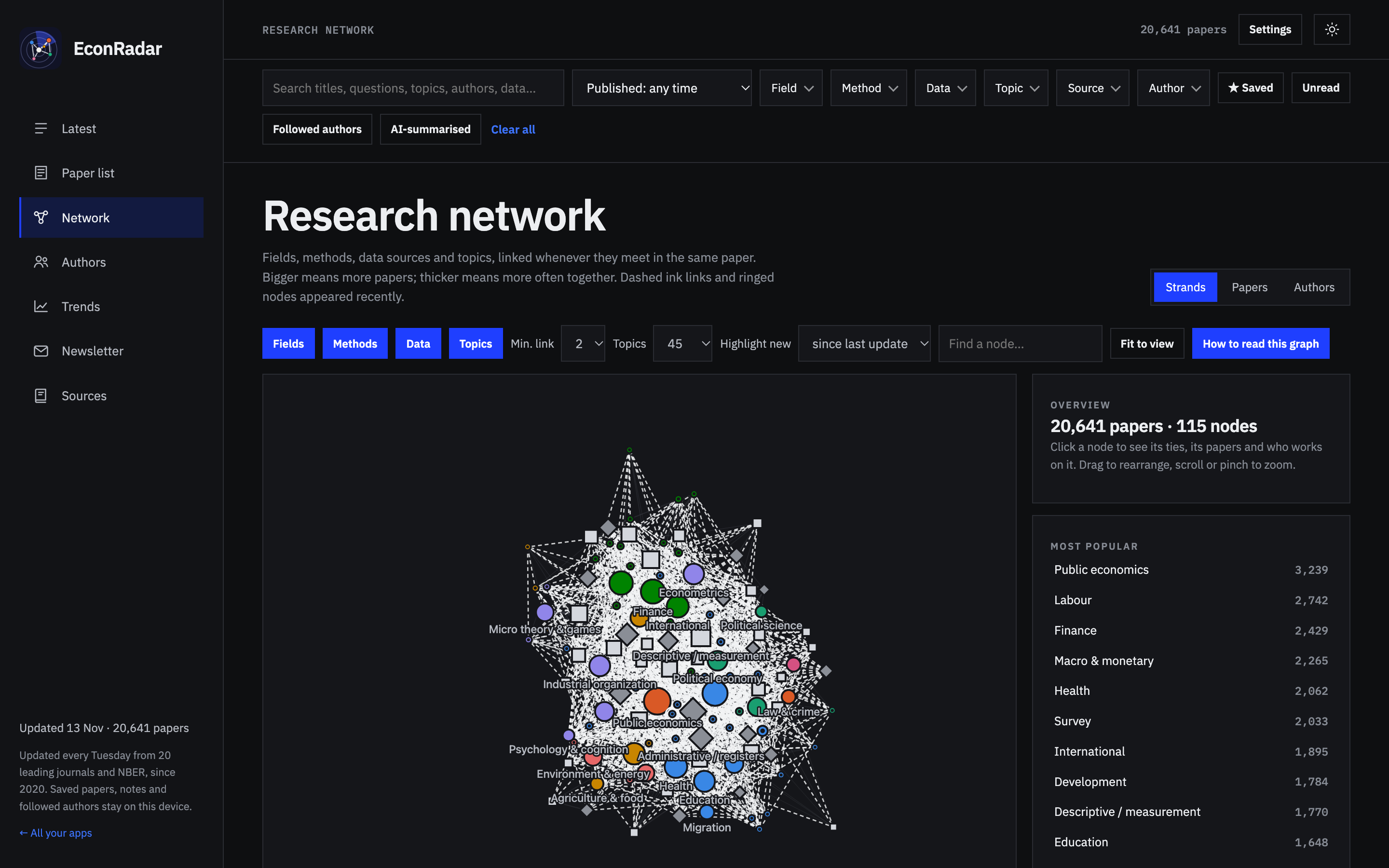
Knowing a paper exists is nice, yes, but unless you are already very well informed about a literature or your brain never runs out of memory, it might be hard to identify on the spot how it distinguishes itself from prior work on a related subject or, conversely, what it takes from them. This is what the network tab is for! By providing a synthetic view of the full database available on EconRadar, you can quickly dive into a paper, topic or research method of your choice and get a good feel for where it fits with the rest. This is especially useful to try and pin down one of those annoying research gaps that keep evading you.
03
Who does what?
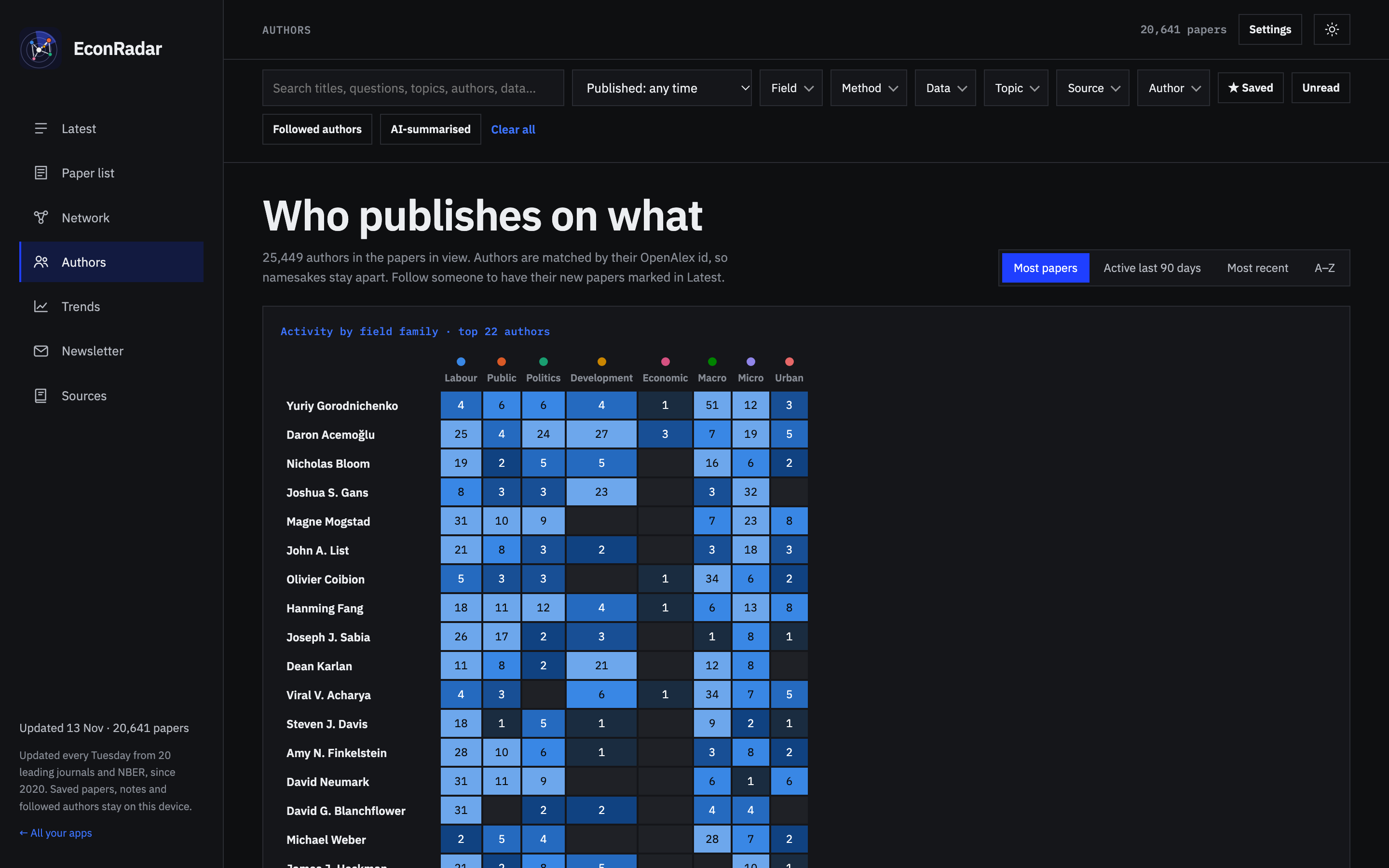
As in any line of work, if you want to work on something, it’s always better to know who wrote about it first. The author page essentially gives you a detailed list of all recent contributors in your field of interest and lets you create your own list of top authors based on their contributions, research interests and so on.
What you will find on the site (in short)
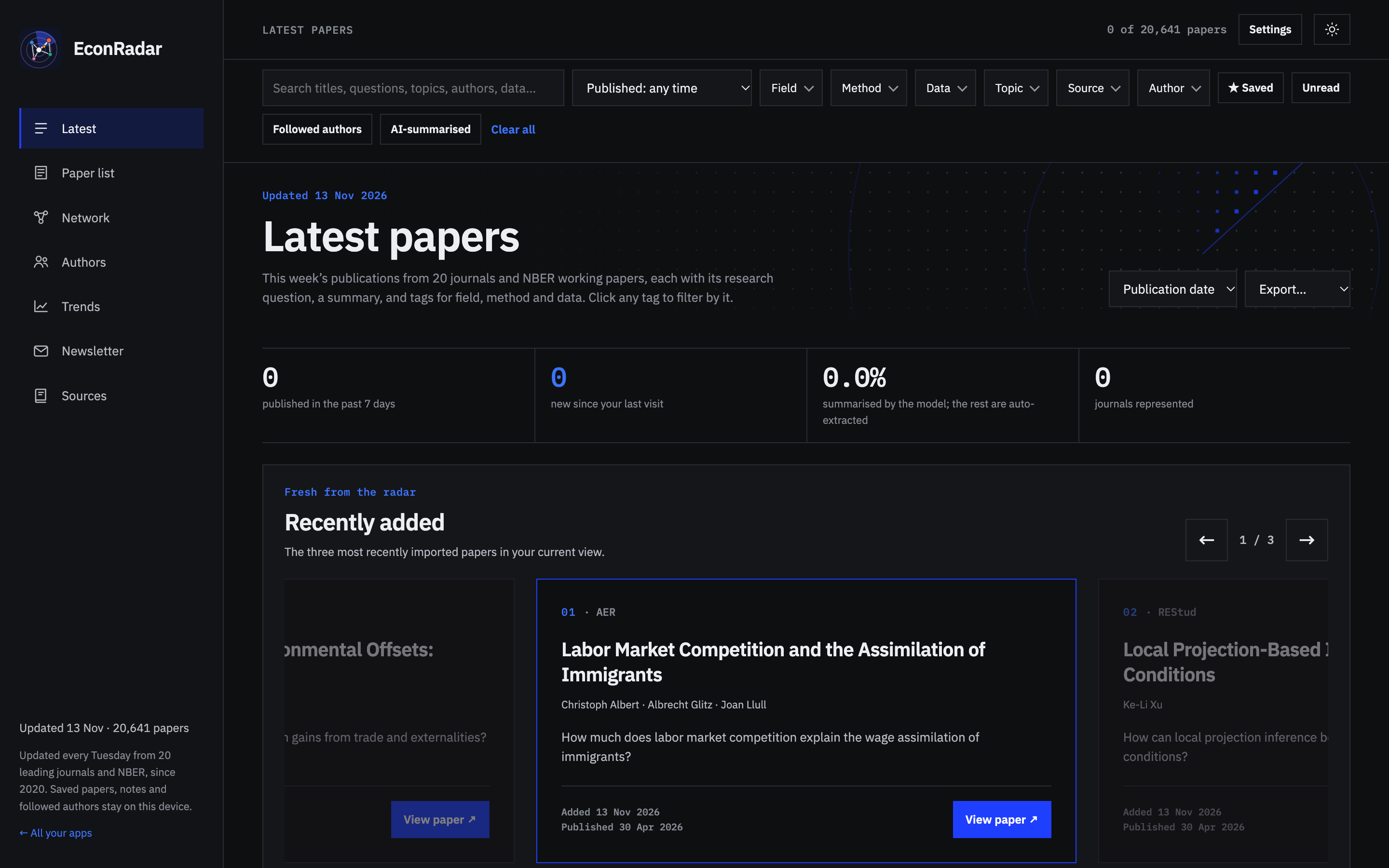
Latest
Every new paper with its question, contribution and identification, filterable by field, method, data, journal, author and publication date, and exportable to BibTeX, RIS or CSV.
Network
Fields, methods, data sources and topics linked whenever they meet in a paper, so that new combinations stand out, such as a method entering a field or a new kind of data. Other views link papers to their nearest neighbours and authors to the fields they publish in and to their co-authors. A replay rebuilds the map week by week.
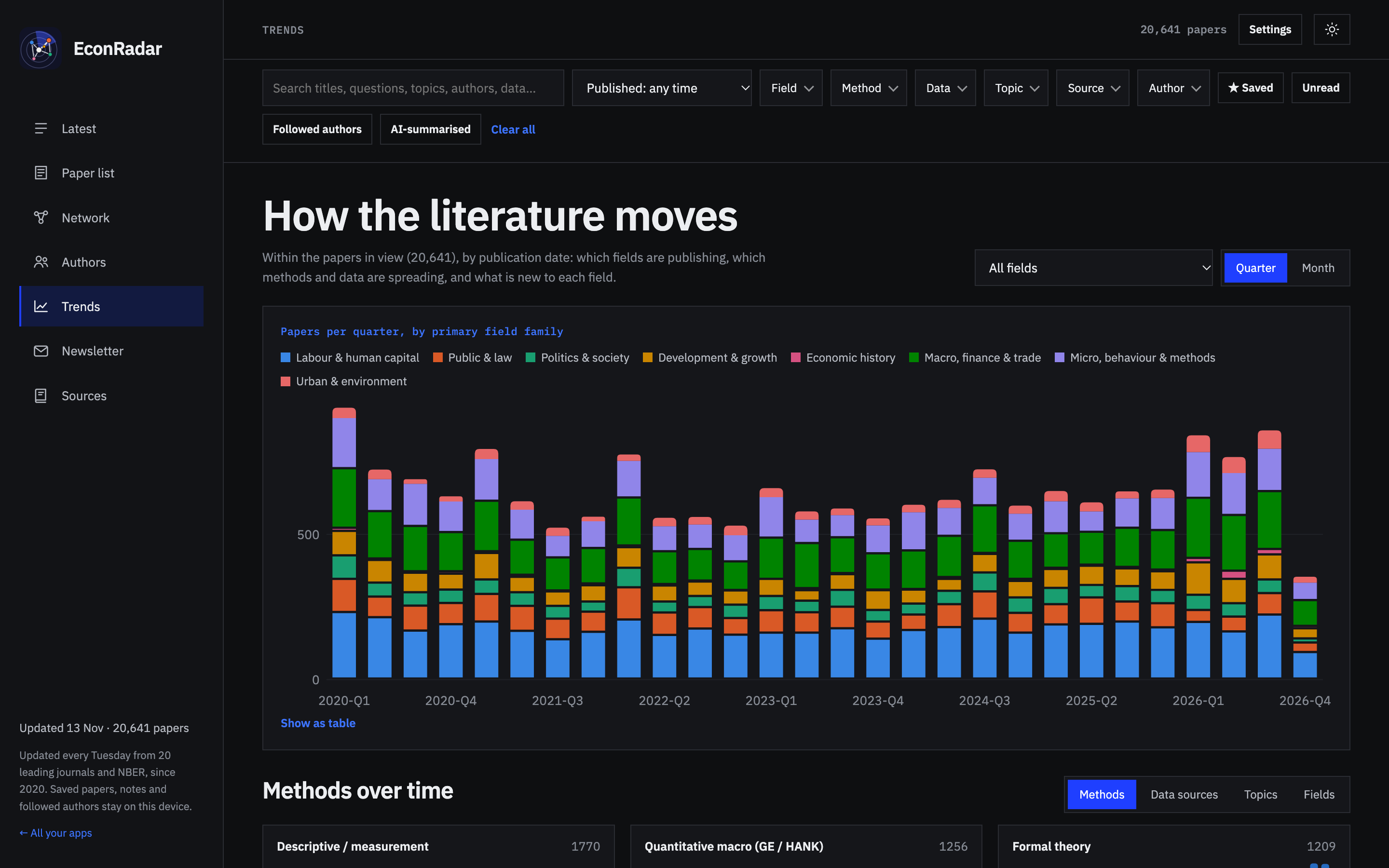
Trends
What each field publishes over time, which methods and data are spreading or fading, and a log of “firsts”, the first time a method or a data source appears in a field.
Authors
Who publishes on what, with profiles, co-authors, and a flag on new papers by the authors I follow.
How it is built
EconRadar is hosted directly on GitHub, and its database is maintained via weekly LLM extracts which retrieve new papers and summarize them based on a predefined list of instructions. While I am currently relying on a very simple infrastructure with barebones Claude API calls that are run from my Claude Pro account, I plan on setting up a proper instruction-based open-weight LLM (probably Qwen or Gemma) on a Linux VM to handle most processing steps currently performed by Claude. This should ensure the app is self-reliant and does not depend on pricey API-based commercial LLMs to stay relevant.